
Japan (Soroban)
Japan, the abacus is called soroban (算盤, そろばん, lit. “counting tray”). It was imported from China in the 14th century.[46] It was probably in use by the working class a century or more before the ruling class adopted it, as the class structure obstructed such changes.[47] The 1:4 abacus, which removes the seldom-used second and fifth bead, became popular in the 1940s.
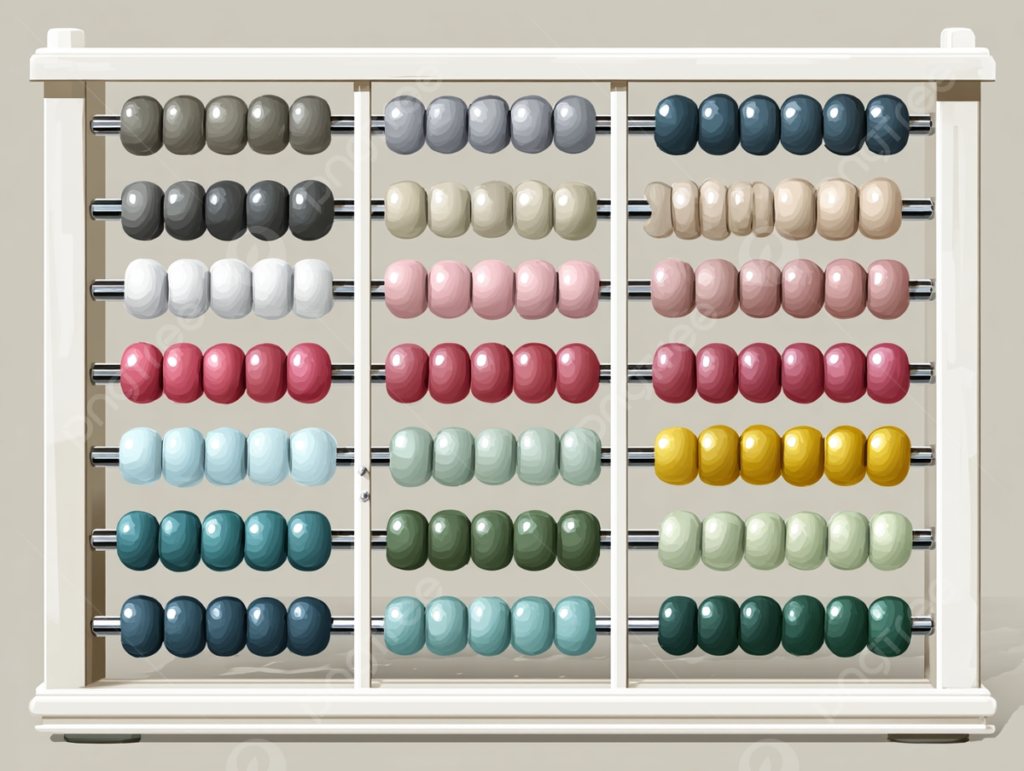
Today’s Japanese abacus is a 1:4 type, four-bead abacus, introduced from China in the Muromachi era. It adopts the form of the upper deck one bead and the bottom four beads…
Our Franchise Areas
Global Improvements
The four-bead abacus spread and became common around the world. Improvements to the Japanese abacus arose in various places. In China, an abacus with an aluminium frame and plastic beads has been used. The file is next to the four beads, and pressing the “clearing” button puts the upper bead in the upper position, and the lower bead in the lower position.
The abacus is still manufactured in Japan, despite the proliferation of pocket electronic calculators. The use of the soroban is still taught in Japanese primary schools as part of mathematics, primarily as an aid to faster mental calculation. Using visual imagery, one can complete a calculation as quickly as with a physical instrument.[48]
The abacus is still manufactured in Japan, despite the proliferation of pocket electronic calculators. The use of the soroban is still taught in Japanese primary schools as part of mathematics, primarily as an aid to faster mental calculation. Using visual imagery, one can complete a calculation as quickly as with a physical instrument.[48]
Korea
The Chinese abacus migrated from China to Korea around 1400 AD.[25][49][50] Koreans call the abacus jupan (주판) or supan (수판), and the act of using a jupan is jusan (주산).[51] The four-beads abacus (1:4) was introduced during the Goryeo Dynasty. The 5:1 abacus was introduced to Korea from China during the Ming Dynasty.
India
The Abhidharmakośabhāṣya of Vasubandhu (316–396) says that the second-century CE philosopher Vasumitra said that “placing a wick (Sanskrit vartikā) on the number one (ekāṅka) means it is a one while placing the wick on the number hundred means it is called a hundred, and on the number one thousand means it is a thousand”.
It is unclear exactly what this arrangement may have been. Around the 5th century, Indian clerks were already finding new ways of recording the contents of the abacus.[52] Hindu texts used the term śūnya (zero) to indicate the empty column on the abacus.[53] Since 2020, the organization Indian Abacus has run a national abacus competition in India.[54]
It is unclear exactly what this arrangement may have been. Around the 5th century, Indian clerks were already finding new ways of recording the contents of the abacus.[52] Hindu texts used the term śūnya (zero) to indicate the empty column on the abacus.[53] Since 2020, the organization Indian Abacus has run a national abacus competition in India.[54]
Americas
Some sources mention the use of an abacus called a nepohualtzintzin in ancient Aztec culture.[55] This Mesoamerican abacus used a 5-digit base-20 system.[56] Its complete meaning was “counting with small similar elements.” The device featured 13 rows with 7 beads, 91 in total. It had a close relation to natural phenomena: one Nepōhualtzintzin (91) represented days in a season, and four approximated one year.
The rediscovery was due to David Esparza Hidalgo.[57] Sanchez wrote in Arithmetic in Maya that another base 5, base 4 finger abacus had been found in the Yucatán Peninsula that also computed calendar data.
The rediscovery was due to David Esparza Hidalgo.[57] Sanchez wrote in Arithmetic in Maya that another base 5, base 4 finger abacus had been found in the Yucatán Peninsula that also computed calendar data.